Serving those who have Served


By Cristen Scifo

For the past couple of weeks, I have been completing my food service rotation through the Veteran Affairs health network. While at the Loch Raven long-term care center, my partner Samantha and I were given the opportunity to arrange a special theme meal for the Veterans there. As we were only at Loch Raven for two weeks, the meal had to be planned, created, and pulled-off in a very short period. This required me to think creatively and be flexible. As Loch Raven is a long-term care facility, the population is typically comprised of older Veterans, many of which require adaptations be made to the food so that they can safely chew or swallow their meals. Others require tools to help them feed themselves if they have arthritis, Parkinson’s, or have suffered a stroke. Although it was not always easy, working with the Veteran population was both educational and rewarding.

On our first day at Loch Raven, our preceptor informed us that she needed a menu from us by lunch as the purchase order would need to be submitted that afternoon. The theme of our meal was to be an Election Day lunch so we focused on picking items that would reflect American cuisine but still be suitable for most specialty diets. We decided to make the entire meal heart healthy, since there were no non-dialysis renal residents. That meant the the only modifications needed would be texture modifications. Eventually, we had four different diet plans for the day: regular, mechanical, puree-mechanical, and puree.

unnamed

Since we were offering a variety of textures, we wanted to know more about what foods were appropriate for each diet and what products were available. For the pureed diets we provided pureed, molded, chicken and pork patties, corn, green beans, mixed berries, and strawberry cheesecake. Since the pureed foods were molded (shaped), they did resemble the original food. This created a more enjoyable experience for the Veteran eating the meal. The mechanical pureed diet was given the same menu as the pureed. The mechanical diet was modified slightly but was similar to the regular diet. An example would be the use of diced tomatoes rather than fresh in the caprese salad. Those following a mechanical diet are not allowed fresh vegetables, with some exceptions. Their vegetables must be cooked or canned. This modification allowed these residents to enjoy this side dish.

After a week of planning it was time for the meal. Samantha and I had put finishing touches on the advertisements, menu, and allergen guide the day before, so all that was left was to prep some of the food. We spent the morning of our meal chopping tomatoes and mozzarella for the salad, plating cake, and, for a patriotic touch, adding blue food dye to Sprite. We then worked with the amazing recreational therapy team at Loch Raven to decorate the room where we would be serving the Veterans. The meal went well with only minor bumps. We had more Veterans attend then we were expecting and nearly ran out of food. Fortunately we were able to react under the pressure and, with the help of the chef, provide alternative pureed options for the newly arriving Veterans.

45696416_2435310719817527_8154702878468997120_o

45809642_2435310293150903_105812678320062464_o

Overall, this theme meal was a success and we got many positive comments from the Veterans and the staff. The Veterans loved the change of pace and the different menu. From purchase orders to production sheets, I learned so much about food service and accommodating dietary concerns. I am so grateful for the opportunity to give back to our nation’s Veterans while completing my dietetic internship. I am also thankful for the amazing staff at Loch Raven and our preceptor for all the guidance and support it took to pull off this theme meal.

45400879_2435310509817548_9120219420759687168_o


Simple, Seasonal & Sweet!

By: Samantha TenEyck

The moment I was told I would be completing my food service rotation with the VA Maryland Health Care System I knew it would be a great fit. Three major facilities form the VA Maryland Health Care System, Baltimore, Loch Raven and Perry Point VA Medical Centers. Luckily, I had the ability to observe each facilities’ Food Service Department and appreciate their different cooking and dining procedures. I was fortunate enough to serve our Veterans in a variety of unique settings, with a slew of educational resources at my fingertips. Although my experiences at each location were noteworthy, as many of my fellow interns know, I have quite the sweet tooth. As a result, I chose to focus on the baking demonstration I conducted at Perry Point Medical Center.

Perry Point Medical Center is the largest inpatient facility within the VA Maryland Health Care System. Although this facility is known for delivering mental health care to our Veterans, the medical center provides a comprehensive range of inpatient and outpatient services. One service that is offered to Veterans at this facility, and throughout the VA Maryland Health Care System, is the MOVE! Weight Loss program. The MOVE! program offers its members a series of classes comprised of nutrition and physical activity education managed by a dietitian.

Every Thursday, Mr. Richard Blue, the main cook at Perry Point, works with the Dietitian to create a demonstration for the MOVE! program’s “Healthy Teaching Kitchen.” The Healthy Teaching Kitchen demonstration is a segment of the MOVE! classes that aim to improve the Veteran’s cooking skills and nutrition knowledge. In the attempts to educate and promote behavior change in the Veterans, these demonstrations generally involve recipes that focus on a variety of disease states. With the holiday season approaching, I chose to use the opportunity to plan, execute, and demonstrate two holiday desserts. Mr. Blue, who knows the MOVE! program members quite well, felt it would be beneficial for me to create desserts appropriate for individuals living with diabetes.

After completing some recipe research, Mr. Blue and I decided to go with an apple pie crumble pastry and a no-crust sweet potato pie. I tried to create recipes varying in skill level, one being an easier dessert for a beginner cook and the other a bit more difficult.  Samples are made prior to the Healthy Teaching Kitchen for the Veterans to taste, so it was time to get baking! To begin, I converted the recipes to yield twenty desserts and began gathering the ingredients. At Perry Point, ingredients are held in the basement storage area and measured in the portioning room. In order to save the cook time, ingredients for each meal are gathered and portioned in the basement and transported upstairs to the kitchen.

Mr. Blue oriented me with the kitchen and we got started by baking our sweet potatoes in the oven and steaming our sliced apples. While the apples were steaming, I worked on creating the sweet oat crumble and molding the puff pastries into mini pies. Once the apple mixture formed into a thick, warm slurry, I portioned the apples into the puff pastries, topped with crumble and pinched the dough, forming ready-to-bake mini pies.

After the sweet potatoes were baked, I removed the skins and placed the potatoes into a mixer. Although Mr. Blue gave me tidbits of advice throughout the entire baking process, he said the most important thing he would tell me all day was this: a sweet potato pie with strings is not a sweet potato pie. After being sure I removed all the strings, I added the additional seasonings, eggs and milk forming a smooth mixture. Simple as that, my crustless sweet potato pie was ready to bake!

In order to prepare for my demonstration, I tidied up the mobile creation station, and took key notes on the steps of the recipes, pertinent nutrition information and some baking tips and tricks I found to be helpful. For example, I spoke with the program members about the high fiber content of sweet potatoes. By chatting about the relationship between the recipe and specific nutrient benefits, I was able to facilitate a discussion about the significance of fiber intake among individuals with diabetes. Another talking point we discussed during the demonstration was the potential benefits and drawbacks of non-nutritive sweeteners. The members were very intrigued by this subject, as many diabetic recipes call for the use of non-nutritive sweeteners, such as Splenda or Truvia. One member stated that the “research is always changing with these things,” which is true of most nutrition research. I explained to the members that nutrition research for many topics, including artificial sweeteners, is still in its early stages. I could tell that the members were concerned by this, so I began by sharing my knowledge of the five non-nutritive sweeteners that have been considered “Generally Recognized as Safe” by the U.S. Food and Drug Administration (FDA) to ensure that the members had a resource to refer to in the future. I informed the members that products containing non-nutritive sweeteners can be used to replace sugary food and drinks in order to prevent hyperglycemia in individuals with type 2 diabetes. However, since non-nutritive sweeteners offer little to no nutritional value or calories, regularly consuming or incorrectly substituting these products could become problematic. A large component of the MOVE! program is teaching members how to grocery shop and properly label read. To conclude my discussion on non-nutritive sweeteners, I addressed the importance of reading artificial sweetener labels. Often times, non-nutritive sweeteners undergo chemical changes at high temperatures. Therefore, to ensure safe consumption, I recommended that members read the product label carefully and adjust the recipe as needed.

I am quite certain the program members who attended the baking demonstration learned a lot, as did I. I learned that rather than simply lecturing information into the audience, it is beneficial to shift back and forth from nutrition education and demonstrating to maintain the members interest. I also found that by providing the Veterans with educational materials to take away, such as the recipes and nutrition information I spoke about, they could focus on the demonstration, take notes, and most of all, enjoy their dessert samples!

Overall, the demonstration was a wonderful way for members not only to learn cooking skills and nutrition education from a cook and a Registered Dietitian, but one another. It was incredibly empowering to see the Veterans connecting with one another through nutrition to improve their health and wellness. The MOVE! members are very enthusiastic about the changes they make and achieving their goals. For that reason, I believe the MOVE! program will continue to be an advantageous resource for Veterans across the VA Administration.

Working Alongside Community Educators

– By Jackie Choffologo

The day was finally here. Every intern’s most enjoyable rotation (so I had heard)- community nutrition with FSNE! I was so excited to get out into the community and see how nutrition science was explained to the public. Before I dive into the many incredible experiences I had during my two weeks at FSNE, let me lay the groundwork for what this program is all about.

What is FSNE?

FSNE stands for the Food Supplement Nutrition Education Program run out of the University of Maryland Extension Office. In other states, this program is called SNAP-Ed and compliments the benefits that SNAP recipients receive. FSNE provides nutrition education targeted at SNAP recipients and SNAP-eligible community members. FSNE works with literacy centers, local food banks, soup kitchens, WIC offices, senior centers, community centers, neighborhood groups, and homeless shelters around the community. All of the lesson plans, recipes, and resources used by FSNE are publicly available on their website.

My Community Interest

Teaching has always held a special place in my heart since my mom is an elementary school teacher. When I was younger, she tried to convince me to become an educator because of my love for office supplies and color coordinated notebooks. As it turns out, I didn’t have to choose between nutrition and teaching. Nutrition and teaching go hand-in-hand! Nearly every nutrition job, from an acute clinical practice to research, involves disseminating nutrition principles. The times when I can talk to someone about nutrition and see them take a genuine interest in the information are the among the most rewarding for me.

My interest in community nutrition stems from high school I was able to help lead a healthy cooking class for third graders. My team and I lead lessons on food safety, properly using kitchen equipment, and of course, how to make easy and delicious recipes! Watching the kids have fun  in the kitchen was incredible to see. I was sure I was going to have the same feeling when I was out in the community with FSNE.

Projects

On our first day, my internship partner, Isabella, and I reported to the FSNE state office in Columbia, MD. We received a list of projects to work on including blogs, Facebook posts, and reviewing curriculum. One of the first things I noticed about the office was every door was open! People were collaborating and sharing experiences throughout the entire day. While Isabella and I had our own office to work in, everyone was approachable and willing to answer any questions we had.

file-2
Our ice cream in a bag activity at the Fall Fest event

Fall Fest Event

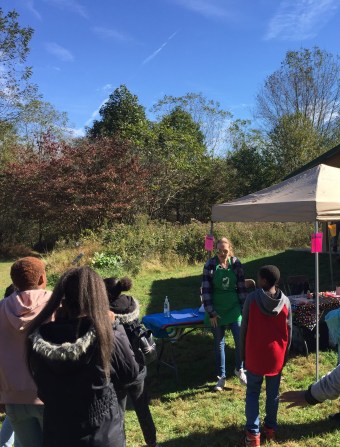
One of the most memorable educator shadowing days was at the Fall Fest in Oregon Ridge Park. While driving to Oregon Ridge Park, I was awestruck by the natural beauty of western Maryland. The scenic back-roads reminded me of the twisty-turvy roads in my hometown of Chadds Ford. Our first stop was the county FSNE office across from the park. We filled up coolers with ice and milk for the “ice cream in a bag” activity we were going to lead with the students. Entering the park was like taking a step back in time. There were older houses that were currently being used for administration with an old apple press out front and a fire pit to the other side.

That day we were working with a FSNE educator at an “ice cream in a bag” station that was sure to be a crowd pleaser. This event offered Baltimore students an opportunity to engage in outdoor activities on a day they had off from school. Each school group rotated through nine stations, and they were with us for roughly 25 minutes. We had a lot to pack in during those 25 minutes!

pic
Getting warmed up before making ice cream!

The students would huddle around the table for a quick lesson before we dove into the activity. Isabella and I explained how ice cream is a “sometimes” food since it is high in sugar and fat. However, that day was a special occasion, so we were enjoying a “sometimes” food. We then drew the connection between food as energy, and exercise as a way to burn off excess energy. And what better way to exercise than taking a nature hike! We led the kids on a 10-minute walk in the park and they were especially enthusiastic whenever they saw a butterfly or squirrel. Then we went through the steps on how to make this magical ice cream in a bag. The students really liked shaking the bag, some even danced while the cream congealed! But the real fun was when they were able to taste test their science experiment. There were a lot of laughs and smiles at our station.

FSNE was an incredible experience. I was able to observe the dedication educators have for the community they serve. I saw students’ faces light up when they saw the FSNE educator walk into the classroom. And most importantly, I saw how nutrition education was making an impact in these communities. Students retained information they had learned in years past about MyPlate and the basic food groups. They remembered what made a food a “sometimes” food versus an “anytime” food. Being able to combine nutrition education with fun interactive activities is what made this rotation so enjoyable.

Energy Is More Than Calories

– by Lorraine Butler

 Intro photo credit: World Central Kitchen

Let’s face it, we all have things going on in our lives that can zap our energy and creative juices and sometimes we need a jolt. The Food and Nutrition Conference and Expo (FNCE) last week was my jolt; it really energized me. The days were long, but the balance of learning from numerous sessions, networking and connecting with colleagues, and checking out new products and resources in the expo hall provided much stimulation. What really gave me energy, though, was hearing two speakers, Bonnie St. John and chef José Andrés. They spoke of resilience, choosing habits that will help you accomplish your goals and being bold. Hearing these messages woven between the other educational sessions gave me just the boost I needed.

The Merriam-Webster dictionary defines resilience as “an ability to recover from or adjust easily to misfortune or change.” Bonnie St. John was the perfect person to speak about resilience. She won three Olympic medals at the 1984 Winter Paralympics in Innsbruck, Austria, so it was fitting that she told about research on what sets successful athletes apart from their worthy opponents. Ms. St. John explained why she considers resilience a meta-skill and introduced the idea that we can do things between points of exertion to regain our strength and energy. The framework suggested ways to refocus, reset, re-frame, refresh and renew.

Dietitians already know about the importance of eating well for energy, but Ms. St. John suggested we make other small adjustments in our daily routines to stay energized and focused. Here are three of her ideas.

  1. One idea for staying refreshed is to include physical movement and take moments of rest throughout the day.
  2. “Zoning” was part of Ms. St. John’s plan for refocusing. To do this either set aside time on your calendar for doing focused work or go to a quiet place when your work requires concentration.IMG-0803
  3. Your can create a “first-aid kit for your attitude” for when you need help reframing your attitude. This is a collection of things that will give your attitude a boost, such as a thank-you card that you received, pictures, mementos or a joyful song.

The first two ideas are not new to me, but Ms. St. John’s “first-aid kit for your attitude” was. Her talk about these three ideas reminded me that I do my best when I am physically, mentally and emotionally in a good place, and I can make micro changes to my routine to set myself up for success.

While Ms. St. John focused on the little things in our routine, chef José Andrés looked at the big picture. His call to action was for dietitians to be bold. He told about his bold move to create World Central Kitchen (WCK) even though nay-sayers said he wasn’t equipped to help in the aftermath of natural disasters. But Andrés knows that chefs work well in chaotic surroundings, so he persevered. In just this past year alone, WCK’s Chef Relief Network has served more than 4.6 million meals to victims of natural disasters in Peru, Houston, Puerto Rico, California, Hawaii, Guatemala, and Indonesia. WCK has other long-term projects that are helping to promote smart, clean cookstove technology and combat hunger and poverty. Andrés knows about the obstacles that many people face in getting the nutrition they need. He also knows about some of the obstacles dietitians face as we try to help combat hunger and malnutrition. He recognizes that these big challenges will require bold action and so he encouraged all the dietitians in the audience to create smart solutions to combat hunger. After hearing chef Andrés speak, I am more determined than ever to think outside the box professionally and believe that I can make a difference when I boldly follow my passion.

PR-8-2.jpg
Photo Credit: World Central Kitchen

Reflecting upon these two motivating speeches, I let it sink in how important dietitians’ work is. We distill science to provide guidance and improve people’s health. Food shapes who we are, and dietitians help shape what people eat. Wow! On occasion I have run into obstacles or my energy for doing my best work has waned. FNCE 2018 has given me some tools to combat this should I experience it in the future and it has invigorated me. I hope all the dietitians in attendance are equally motivated and will use what they learned at FNCE to bring their “A” game as they promote good eating habits, work to prevent or manage diseases, and feed others.

FNCE, the Super Bowl of Nutrition

By: Stephanie Jean

Just like the highlight of the football season is the Super Bowl, the highlight of the year for a dietitian is the Food and Nutrition Conference and Expo (FNCE). The location changes each year, and this year it was in Washington, D.C, which was an exceptionally convenient location for the UMD internship. I have been anticipating the opportunity to attend FNCE for quite some time now, so I couldn’t wait to see all of the things that I have only heard of. It’s a gathering place for networking, continuing education, and fellowship. The energy is high, the crowd is upbeat, and the city is filled with dietitians from around the world.

IMG_1380The FNCE conference is four days long and each day is filled with sessions. Simultaneously, an expo is happening as well. In the expo, food and nutrition vendors provide resources on the latest information and innovations happening in the nutrition world. As you can imagine, there are A LOT of exhibitors in attendance. OceanSpray even brought an entire cranberry bog to the expo, and provided us with overalls and boots to have a real-life experience as a cranberry farmer! The berries have pockets of air on the inside that make them buoyant, and they are picked by a water reel for harvesting. We didn’t have a water reel, butRachel and I sure did make use of the other props. A full blown on photo shoot was happening here, and we had our best glam on to capture the moment.

IMG_1414

The exhibits are fun and engaging with high energy, but a 20 minute walk through the exhibit can quickly turn into 2 hours. So, I recommend planning your time beforehand and setting alarms on your phone so that you don’t miss any sessions. Each session has learning codes, which gives an insight into what the session will be on. This information can be seen on the FNCE app, which is a tech tool with an abundance of other information related to sessions. My favorite session that I attended was on nutrition implications on immigrant and refugee populations in the U.S., with learning codes on cultural sensitivity, cultural/ethnic food and culinary practice, and food security and hunger. The segment of the session that engaged me the most was Picture1by Ms. Msora-Kasago, who specifically spoke on the immigrant population of Africa.

Ms. Msora-Kasago’s presentation touched on a topic
that is crucial to the dietetics profession. The U.S. is more diverse now than it has ever been before, including immigrants from various countries around the world. With this being said, it is IMG_1522 2important that dietetics professionals approach immigrants with information that is pertinent to their indigenous background. The process of moving to a new country involves acculturation and diet change, which includes adopting to the new country’s eating patterns. For many immigrants, their traditional eating pattern focused on factors such as taste, beliefs, culture, connection, and nostalgia. These factors change when transitioning from the indigenous country to the new country. During the transition phase to the U.S., accessibility (cost and transportation), time constraints, marketing, and peer pressure/influence are factors that affect the new eating pattern.

When approached with a situation as this, it is recommended to:


  • Provide culturally tailored nutrition education that emphasizes nutritious foods
  • Modify the traditional diet only when applicable
  • Be inquisitive by asking questions to fully understand the traditional eating pattern
  • Self-reflect to identify biases that may negatively influence recommendations and nutrition care plans.

From this session I learned that these practices make it more likely that the nutrition professional will have success in promoting a modified eating pattern that is useful for the patient. After this session I realized that these applications will be especially pertinent to me, considering that D.C. is home to a large immigrant population. I enjoyed this session tremendously, and appreciate the opportunity to learn from other professionals that initiate diverse topics. FNCE was a blast, and left me with a tremendous amount of inspiration. It surpassed my greatest imagination, and I have a feeling that #FNCE2019 will be one for the books!