Chef For a Day

By: Meredith Murdock

Making a meal for yourself is toilsome. Between the planning, preparation and cooking, there is a lot of time and thought that goes into the process. It can be exhausting! Have you ever thought about what it would be like to plan a meal for 100? During the last week at my food service rotation with Ascension Saint Agnes Hospital, my partner, Jen, and I had the opportunity to choose and plan our own meal to serve in the retail cafeteria. Through this experience I learned a lot about the importance of planning and being time efficient. I also gained an immense amount of appreciation for all the staff. 

Our first step was to figure out what dishes we wanted to serve. Our selections were based on seasonal foods, both rich in flavor and with high nutritional value. We knew we wanted to combine a soup and salad of some sort because of its comfort and warmth going into the fall season. Additionally, Jen and I decided to add a less popular green choice, kale, into our menu to introduce and educate consumers on the health benefits. We saw a need to emphasize the proper way to massage the kale before serving; a step that is crucial in loosening the fibers to produce a softer texture and less bitter flavor. Therefore, our final menu consisted of a chicken pesto panini, butternut squash soup and a fall harvest apple kale salad. 

Jen and I then needed to scale each recipe and determine how much of each ingredient we would need in order to serve 100 people. Between estimating the amounts and ordering the food through Saint Agnes’s online system, this was definitely one of the harder tasks we came upon. We needed enough ingredients, correctly estimated, plus extra in case. The day before we served our meal, we prepped our ingredients; we cooked the chicken, cut produce and made the salad dressing. The morning of our big day, we came in an hour earlier than usual. This ended up being the most crucial hour in all of our prepping and planning. This was when we added the last few spices to our soup, set up our exhibition station display, and stored extra ingredients for refills. 

Planning and cooking in bulk is not easy, as we learned very quickly. However, with the help from all the staff and chefs, we successfully made and served about 75 people that day. We have so much admiration for those that work in the kitchen for hours preparing, planning and cooking both patient meals and cafeteria meals for the staff and visitors to the hospital. Jen and I also reflected on how many potential consumers glanced at our menu and quickly decided it was too healthy because of its incorporation of kale and butternut squash. I spoke with one woman who initially was hesitant, but decided to try it; she loved it so much she asked for the recipe so she could make it at home. This positive feedback among others was exciting to receive and makes me feel more inclined to introduce other vegetables that aren’t as wildly popular in the future. I hope this encourages the customers to use vegetables such as kale and butternut squash in their future cooking as well as being flexible to trying a new ingredient or meal. 

Working the Manna Magic

By: Anna Bougie

I saw magic during my rotation at the Manna Food Center. This magic stems from impassioned people working together to achieve the same goal. Manna is the largest food bank in Montgomery county. They strive to end hunger through food distribution, education, and advocacy. Manna has served over fifty thousand people and distributed over three million pounds of food within the community. They also documented over forty thousand volunteer hours, including my hours — so cool! My first day at Manna I participated in one of the volunteer activities where we packaged fresh produce into boxes to be distributed to those in need. I remember making small talk with the other volunteers and learning that most of them have been volunteering at Manna for years. At first I thought, “wow, that’s some commitment” which it is, but I quickly realized that people who volunteered at Manna truly loved it.

Before my experience with Manna, I hadn’t visited a food bank. Although I came into this rotation with an open mind, I had stereotypes in my head of what a food bank looked like, how it functioned and what kinds of products were being donated. I thought there would be minimal variety, mostly canned goods, and a lack of fresh product. Boy, I was wrong! I was packaging boxes of fresh sweet corn, egg plant, peaches, celery, and way more. I made special boxes for people who preferred to eat only organic foods or BPA free foods. Manna also provides special boxes for medical restrictions such as diabetes or cancer patients. I felt as my leadership skills showed through during this time as I was helping Manna volunteers understand why we were putting certain items in the boxes. For example, I lead volunteers on making boxes for diabetic patients. I was responsible for explaining that they are receiving whole grain pasta because they need more fiber in their diet which can help regulate carbohydrate absorption. 

In addition, I learned that many restaurants and grocery stores donate food to Manna. I was surprised to see that I was filling up boxes with specialty food items such as guacamole, energy bars, flatbread pizzas, and more! The specialty items seemed to be endless during my volunteer shift. Although initially I felt surprised that natural and organic stores donated to Manna, I soon realized how good of a job Manna does to advocate for people in need within the community and maintain relationships with a variety of grocery stores, including specialty stores.

Not only did I get volunteer experience at the Manna warehouse, I also got to spend time at the Manna Market, which is in a different location. During my time at this location, I developed signage for the market to make the shopping experience at Manna more efficient. I had to use my critical thinking skills to determine what should be included on the signage. At first I tried to add nutrition education to the signage and then realized that it may work better to only have the label of what the food is and then add an additional sign to educate on nutrition. This is because  adding more information to the label made the print too small. Adding a supplemental sign ensured that the label would be easier to read.

While at the market, I got to see first hand how Montgomery County community members were able to select the food that they needed for themselves and their families. I remember talking to many of these people to ask them what recipes they were going to make with the items they got, and to be there to answer any questions they had while shopping. It was such a cool experience to learn about the foods and recipes they were planning to make!

During this time, I also worked on educational inserts for the weekend food bags they provide to kids who usually eat their meals at school during the week. I chose a nutrition topic, an educational game for the kids to play and some facts about the topic for these inserts. I realized that making these was harder than I thought. I found it challenging to simplify the nutrition knowledge so that younger children can understand. However, I learned so much during this process and made the frozen food educational insert below.

I had such a great time at Manna Food Center and learned a lot about community nutrition. It was a great start to my dietetic internship learning from people who are actively helping out in the community. This rotation strengthened my leadership, critical thinking and problem solving skills which will help me succeed as a Registered Dietitian.

Behind the Scenes of a Hospital Kitchen

By: Jennifer Pilut

Have you ever wondered what role food service workers play in the healing and recovery of hospital patients? Prior to my rotation at Ascension Saint Agnes Hospital, I was unaware of the steps and attention to detail that goes into making patient trays. Over the five weeks I was in the kitchen of St. Agnes, there were three parts of the food service system that stood out. The first, and most important, was that executives were passionate, hands-on and willing to lead by example. The second part involved the attention to detail by the staff. And finally, receiving consistent feedback from leadership and hospital patients helped the food service team improve their systems within the hospital. I observed and participated in all aspects of the food service department and believe that these three pillars of administration provide the best food service experience for patients. 

The standard regarding employees’ determination to get things right starts with lead-by-example leadership. As a future dietitian, it was clear to me the impact upper-level leadership has on the overall environment and mindset of the cafeteria assistants. Sarah Epling, the assistant director of the food and nutrition branch, demonstrated this when she said in her office “I am always the walking example of what I need my staff to mirror. If I don’t abide by the food service work attire, how can I expect them to do the same.” As she says this, she points to her shoes, earring selection, and business casual attire. This direct quote illuminates an environment that empowers employees to go the extra mile for their patients and for themselves. Jessica Rinn, the patient service manager who oversees the cafeteria assistants (CA), also stepped up when one of her supervisors was unable to come in. Although many tasks needed to be completed, Jessica put her patients first and stepped in to help. The attitude of the leadership is what sets the standard for other staff members and encourages them to work hard for their patients. 

Picture 1: Serving the Tray Line

Saint Agnes’ food service team is energetic, hard-working, and detail-oriented. Paying attention to detail is especially crucial for food service staff. Hundreds of patients require specific diets that need to be met accurately and safely. Throughout my time observing the CAs complete tray orders rarely did a mistake occur. With only one to one-and-a-half minutes to complete each tray, it is necessary for each CA to stay diligent and focused. The on-deck supervisor is the third and final check-off on the patient tray. This supervisor checks for accuracy and identifies anything that might be missing. During my time at St. Agnes, I had the opportunity to complete a tray accuracy evaluation and practice building the individual trays (picture 1). The most difficult part of both jobs was identifying the specific needs for each diet. From dysphagia patients to renal patients the tray was always changing. This made building and checking trays much more difficult and highlights the importance of ensuring all staff pay attention to detail. 

Another example of a crucial food safety step, taken by the staff at St. Agnes was the chef checking food temperatures. Throughout every conversation I had with a CA, chef, or leadership, they were constantly discussing the temperatures of the food to ensure the food was not at risk for being in the danger zone. Failure to abide by the food safety recommendations and pay attention to this detail could result in a patient becoming severely sick. Ensuring all patients have hot food, receive great customer service, and an accurate tray is the goal for every meal at St. Agnes. 

Picture 2: Test Tray Evaluation Form (left) and Test Tray Order Form (right)

Feedback and testing systems are two valued pieces of information within a hospital setting. Receiving information from patients on their experience with their food, cleanliness of their room and customer service of the employees aids in identifying areas needing improvement. Much of my time in the kitchen was spent taking temperatures of the food before serving, during the service line, and when the food had reached the patient to ensure limited time in the danger zone. This process falls under the responsibility of many clinical dietitians through the completion of test trays (picture 2). The goal of this is to consistently provide feedback to the kitchen on areas that could be improved. The feedback received from patients and the systems in place are what ultimately lead to a better experience for the patient in the hospital. 

My takeaway from this rotation is that a strong food service team stems from dedicated leadership, staff who pay attention to detail and routine assessment of patient satisfaction. It begins with managers setting a cohesive and hardworking standard for their staff when they lead by example. The attitude of the leadership is what pushes other staff members to take pride in their trays and patient services. Finally, St. Agnes values receiving feedback from the patient. After all, pleasant patient experiences and providing nourishment to improve patients’ health is why the food service team works so hard. St. Agnes provides a great example from leadership to staff that each detail, temperature, and patient is important to them. 

The Role of Cultural Competence in Dietetics

By Brandy Leno

It’s no secret that the field of dietetics is lacking in diversity. And while the goal is to ideally have more diverse practitioners that look more like the populations they serve, we should also aim to encourage dietitians to be culturally competent when communicating with their patients or clients. So, what does it mean to be culturally competent? According to the American Psychological Association, it can be described as “the ability to understand, appreciate, and interact with people from cultures or belief systems different from one’s own.” Becoming more culturally competent is seen as a journey, not a destination, so there is always room for growth in personal awareness of biases that may be subconsciously present.

Cultural competence is especially important in the field of dietetics because food is one of the most important aspects of someone’s culture. Personal identity, religious beliefs, and family traditions are just a few things that are tied in with food. It’s easy to give food and nutrition advice based on our own experiences, but we must be aware of our audience and their cultural background to increase the level of adherence to nutrition advice. Because it’s so common to give nutrition advice based on our own experiences, clients who never hear their cultural foods represented when seeing a professional feel like their foods aren’t considered “healthy.” I’ve even had to tell someone that, yes, collard greens are very good for you! Keeping the patient or client’s cultural foods in mind when giving nutrition advice is crucial for establishing trust and creating healthy lifestyle changes.

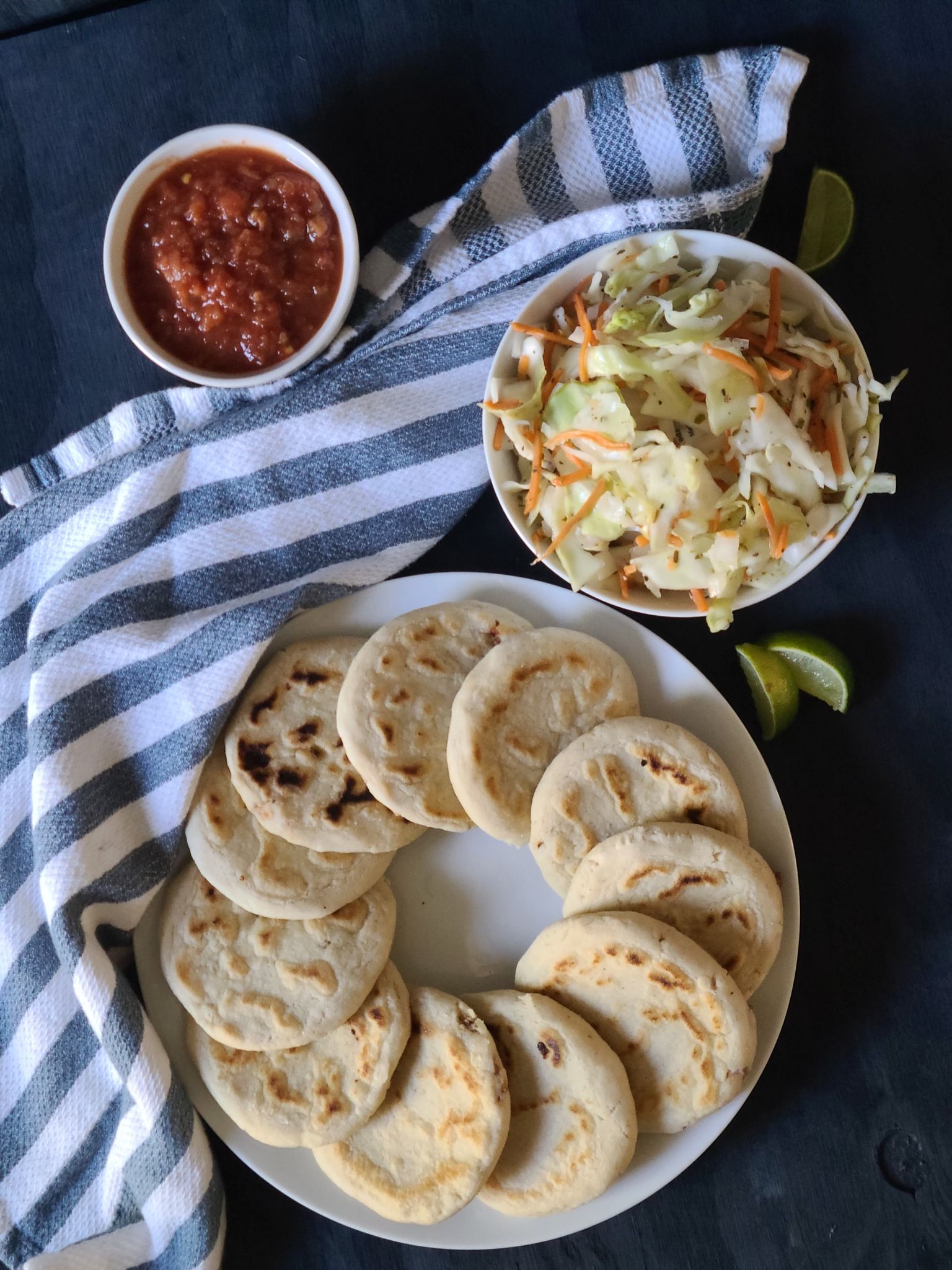
One thing I really appreciate from the University of Maryland College Park dietetic internship program is the dedication to training their interns to become culturally competent professionals. Even before the program began, we were practicing counseling and motivational interviewing skills while keeping the diversity of our clients in mind. We routinely practice motivational interviewing skills during class days using different scenarios and have even received bias training with plenty of open discussion. Since it’s currently Hispanic Heritage Month, our group of interns made different hispanic meals to share with each other. Our dishes included plantain empanadas, arroz con leche, pupusas with curtido, and more. We were able to discuss how the dishes were made and try new recipes. Understanding the different foods and their typical cooking practices was a great way to apply what nutrition information I’ve learned so far to counseling patients of various backgrounds. By continuing this fun experience with different cultures moving forward, I will be able to explain to others what makes these foods healthy and how they fit within MyPlate guidelines.

El Salvadoran pupusas with curtido and salsa roja

Here are some of the things that I’ve learned so far about becoming more culturally competent:

  1. Research is invaluable! As a health practitioner, I strive to become aware of the common cultural backgrounds I see amongst my patients or clients. I want to become familiar with their foods and norms to avoid doing or saying something offensive during interactions and so I can more successfully counsel them. When our group of interns were tasked with making a Hispanic dish and sharing it with everyone, I immediately thought of pupusas. The recipe I wanted to make featured a video that showcased a Salvadoran man and his grandma making the pupusas together. I was able to see the cooking process and listen to what this dish meant to them and their family. Seeing stories like that remind me that food is more than just a meal, so I look forward to hearing them whenever I get the chance. I will also strive to provide educational handouts in different languages to make current research and nutrition guidelines more accessible. At the same time, I will try my best to not make assumptions or stereotype any individual. No one person from any country is the same as someone else, which is why an individualized approach is always best.
  2. Be aware of biases. Everyone has some sort of bias, be it conscious or subconscious, so it’s important to be aware of them. Being able to recognize a personal bias is just the first step in preventing differences in care or treatment between one individual or another solely based on their culture or ethnicity. No one culture or worldview is “right,” so recognizing that can help to increase the quality of patient-focused care.
  3. Listen. Actively listening to individuals during all interactions can help me understand more about them. No person is the same, so listening can help me determine what makes them unique and give advice or guidance that is tailored to their lifestyle.
  4. When in doubt, I can just ask! Asking questions during a session or any interaction is the best way to gather new information. If a client mentions a specific food they make often, if it is unfamiliar to me I can ask how it’s prepared. Making the attempt to engage in conversation and learn something new about the other person will generally be seen positively. Asking questions and clarifying anything I may be confused about is one of the best ways to avoid making assumptions as well.

These tips are only the beginning. As mentioned earlier, becoming culturally competent isn’t a goal, but a process. So far, I am enjoying the journey! I’ve only just begun my experience with UMD’s dietetic internship, but I’m looking forward to interacting with as many communities as I can and learning from those experiences.

Surprises of (Maryland) Food Banks

By Anamarie Bergman

Prior to starting my first rotation at the Maryland Food Bank, I was not sure what to expect! Although this rotation was virtual, I did have the chance to tour the food bank. Upon arriving, I was shocked by the size of it — it is huge! I was also taken by surprise when I learned all of what the food bank has to offer. Not only do they distribute food to over 1,500 food pantries in Maryland, but they also have a community garden, offer professional culinary jobs skills training (FoodWorks), and have nine other programs that provide food for children, adults, and seniors.

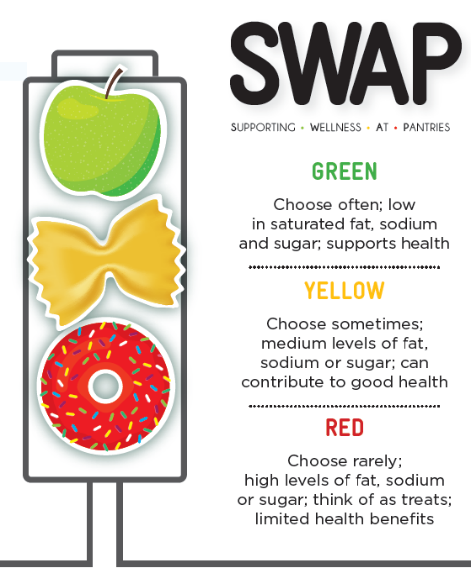
In addition to learning about the programs the food bank offers, I learned about SWAP. SWAP stands for Supporting Wellness at Pantries and is a stoplight nutrition ranking system designed to help promote healthy food choices by categorizing food offered at the pantries.  I never heard of SWAP before and was very impressed to see a lot of food banks and pantries implementing this in their facilities! The foods are ranked by saturated fat, sodium, and sugar content which correlates with the color the item receives. For example, red quinoa is ranked green and would be placed on the green shelf at the food pantries, which they try to keep at eye level. Corn muffin mix, however, would be ranked red, since it is high in sodium, and placed on the red shelf of the food pantry, usually at the bottom of the shelving unit. I believe SWAP is an extremely helpful tool for food banks because of how it helps influence people to make healthier food choices. It made me wonder if this is something grocery stores dietitians could advocate to implement as well! Food items are ranked electronically via Navision, which also is their system for tracking food inventory at the warehouse. Ranking items in Navision is something I helped with during my time at MFB!

page1image5834368

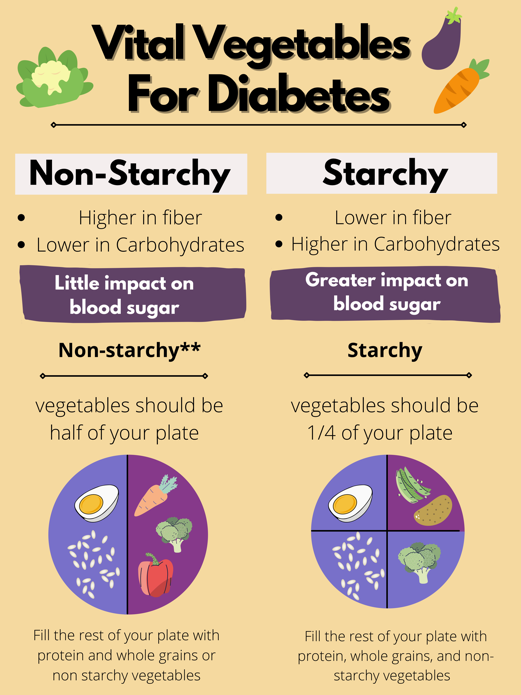
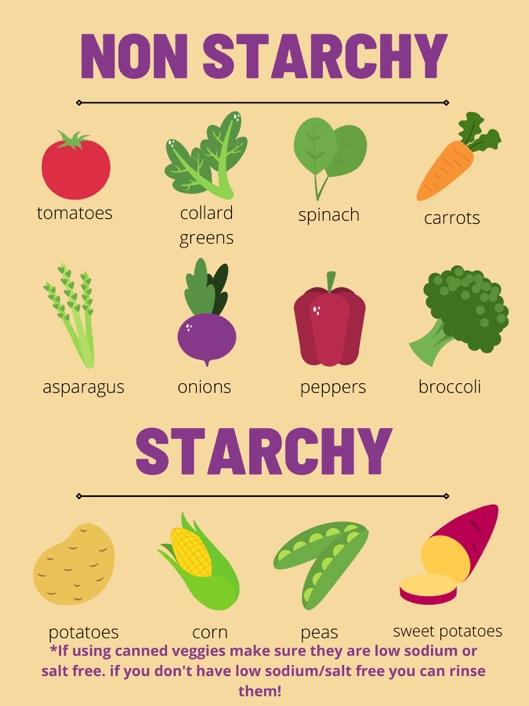
During this rotation, I worked extensively on creating infographics. These easy-to-understand visual representations of information and data typically have minimal text and can simplify complex topics. My main focus was creating diabetes nutrition education infographics to help people in the community. Food banks and pantries create boxes containing food items appropriate for particular diseases or populations, including diabetes. The infographics I created are placed into the boxes to provide education to go with the food they are receiving. I really enjoyed this aspect of the rotation as it allowed me to use my creative side and provide nutrition education — it was a lot of fun! An example of one of the infographics I created for the diabetes population is below. It educates clients with diabetes on the difference between non-starchy and starchy vegetables and provides specific examples of each. I even created a graphic representation of what a client’s plate could look like at each meal. I loved how this infographic turned out and it’s super exciting to know it will be used in diabetes boxes!

Diagram

Description automatically generated Diagram, logo, company name

Description automatically generated

My time at Maryland Food Bank has been very informative. I could definitely see myself working at a food bank in the future because I liked using innovative and creative approaches to educate and inform the community. I was able to tie in a lot of different aspects of the field of nutrition and that’s something that’s important to me as a future registered dietitian!