Learning Experiences Throughout a Clinical Rotation

By: Hannah Etman

In the days leading up to my clinical rotation, I wondered if I had done enough preparation. I had been told countless times that in my clinical rotation I would finally learn to apply the knowledge gained through past coursework and assignments, but I couldn’t help but feel uncertain of what the next 10 weeks at Meritus Medical Center would bring. Entering a 257-bed hospital with little hospital-based dietetics experience was a nerve-wracking experience, but a welcomed one. The excitement and anticipation that I felt upon beginning my clinical rotation were enough to push away the doubt that sometimes crept up—and this ultimately led to an incredible learning experience and a stronger leaning towards clinical dietetics as a career path. 

Seeing patients on general medical-surgical floors contributed greatly to my growth as a clinical intern. I spent the bulk of my rotation on these floors, seeing varying degrees of mostly medically-stable patients and helping to determine their best course of nutrition-related care. Because most of the units at Meritus include a wide variety of patients and disease states, I was constantly shifting gears—seeing patients with renal issues, tube feeding requirements, and heart failure, to name a few. For the first six weeks of my rotation, I spent one to two weeks at a time with a different dietitian, learning the ins and outs of their assigned floors and patients. One of the most significant takeaways from these six weeks was the importance of viewing the patient’s clinical picture as a whole. Patients often had multiple comorbidities and therefore I had multiple things to consider when determining their specific nutrition therapies. It was crucial for me to critically evaluate all aspects of their chart before interviewing them so that I could ask them thoughtful, detailed questions. On some medical-surgical units, I attended multidisciplinary rounds, but on others it worked best for me to evaluate the patients’ charts and then speak to them directly. Ultimately, determining nutrition therapy for these patients came down to their whole clinical picture, other providers’ recommendations, and my discussions with patients.

The overall process I used to evaluate Medical-Surgical patients.

After spending the first six weeks of my clinical rotation on medical-surgical units, I had the privilege of rotating in the Intensive Care Unit (ICU) for two weeks. This was the most highly anticipated experience of my clinical rotation and one that I had unknown expectations for. I quickly learned that the fast-paced nature of an ICU forces you to be ready to change gears at nearly any time. Patients are constantly being transferred in and out and diets may need to be upgraded or downgraded which requires a level of precision and attention that is often more intense than on a medical-surgical floor. This is not to say, however, that any type of unit is easier or more difficult than another. Each unit and patient is different and requires varying levels of care, some requiring little attention and some requiring many follow-ups and changes in care. In the ICU, I spent much of my time practicing tube feeding calculations. Many patients that I saw were either on ventilators or unable to eat food orally and usually required enteral feeding. This meant I spent many of my hours calculating a patient’s estimated nutrient needs, calculating a tube feeding regimen that met those needs and confirming my work with the ICU dietitian so that she could fill in the order on her computer. While in rounds in the ICU, I noticed myself listening intently to what each of the nurses, doctors, and other providers had to say in case anything affected the patient’s nutrition therapy. When there were terms or references that I did not understand, I made sure to write them down and either look them up later or ask the dietitian to explain them to me. Throughout my two weeks in the ICU, I learned to be okay with switching tasks quickly and prioritization. Many different problems or situations arise and it is necessary to evaluate the urgency of each and plan your schedule around that. The changing, highly acute ICU environment helped me further develop my critical thinking skills, manage time wisely, and refine my tube feeding knowledge. 

The Meritus formulary detailing the types of supplements and formulas available.
A handout created by one of my preceptors to help choose the right tube feeding formula for a patient.

Another aspect of my clinical rotation that contributed to my learning was completing a minor and major case study. I chose two patients to study, write about, and then present my findings to the Meritus dietitians. For my mini case study, I chose an adult patient with a suspected fatty acid oxidation defect which interested me due to the infrequence of this condition, especially among adults. I completed a nutritional assessment on the patient, collected information from their chart, and spoke with the patient directly. Afterward, I completed a write-up in which I highlighted my findings from their chart and delved into a further discussion of the condition. I presented this to the dietitians at Meritus towards the middle of my rotation and received great feedback, which I attribute largely to many of the skills I honed during my rotation and while drafting my case study. Patient communication, time management, and my efficiency in assessing patients were reinforced when gathering information for each case study. For my major case study, I chose a patient during staff relief who came into the hospital with persistent nausea and vomiting and was later found with an intestinal obstruction. Similar to the mini case study, I collected pertinent information and completed an assessment on the patient, but I had to collect much more data due to the more detailed nature of the major case study. I went through all of the notes from providers, lab values, medications given, and their medical history. Right now I am in the write-up phase of this case study and will soon present it to the Meritus dietitians, along with other guests. By doing these two case studies, I have learned the importance of thoroughness. There were many times where I realized I was missing a small piece of information, only to have to go back into a patient’s chart to retrieve it. Because of this, I have become more meticulous when gathering the necessary information. I have also learned better methods of taking information and turning it into a presentable format. 

Throughout my clinical rotation, I kept an open mind with a positive outlook in order to gain as much knowledge and experience as possible. It was especially helpful being able to experience the difference between nutrition therapy on medical-surgical units and the ICU. I left Meritus feeling extremely confident in my clinical abilities compared to how I felt when I was just beginning. I attribute much of this to smaller learning opportunities I had throughout my rotation and I am excited to apply what I have learned in future situations.

Prepping for a Clinical Rotation

By: Frances Miller

The clinical rotation in the dietetic internship is a great foundation for all dietitians no matter what path they take after the internship. Prior to my clinical rotation, I did not necessarily see myself as a clinical dietitian. By keeping an open mind, I was able to build a good foundation of clinical knowledge that I can use in a variety of positions. By the end of this rotation I found that I enjoyed clinical more than I was expecting, particularly my time in the intensive care unit (ICU). 

During my first few weeks I felt I was overloaded with information. During this time I was learning the electronic health record system, brushing up on medical terminology and medications I had not previously seen, and, of course, reviewing clinical information I had learned in undergrad. Overall I found that by taking time at the end of the day to review new or complex information, I successfully absorbed the information that was thrown at me throughout the day. I also spent time reviewing prior to rotations in units with a specific focus such as the ICU, renal, pediatrics, etc. This allowed me to feel prepared and confident in my ability to perform calculations and take on more difficult patients on my own. 

Being prepared also meant having the right tools for the job. One of my sites required me to bring my personal computer. It was not required at every site, but I found it helpful to have on hand. This also allowed me to work on projects and homework in the mornings before my official workday started. Since traffic can be unpredictable, I found myself arriving early to my rotation on a daily basis. I used this time preparing my brain. By this I mean I checked my email and worked on clinical homework or projects. This warmup time made it easier for me to feel ready to tackle more difficult information early in the workday. Additionally, I always had buffer time to ensure I was never late to my rotation.

From my personal experience the majority of my preceptors used their phone’s calculator rather than carrying a separate one; however, I still think it is a good idea to bring a calculator. If my phone dies or I have a preceptor who prefers calculators, I will already be prepared. I mainly used this calculator in my two weeks in the ICU. On my first day during rounds, I calculated around seven tube feeding calculations, all of which were calculated correctly. This is something that I did not feel comfortable doing prior to the start of my rotation. I gained confidence by asking questions throughout, spending time reviewing, and being able to complete these calculations on my own!

The thing I struggled most with before starting was determining how I could best organize my papers. I was given several helpful handouts and readings that I wanted to keep on hand. I also had an additional notebook that I used to take notes of things I wanted to refer back to when the day was over. I ended up choosing to bring both a notebook and a binder. I used a few page protectors for handouts that I referred to daily; for others, I used a hole punch and filed them in my binder. I used my notebook to take notes of things I wanted to ask my preceptor or research at home. I learned to make a copy of important documents that I wanted to refer back to after my rotation; this way if they got damaged or worn down I would still have a copy to refer back to.

An additional item that is by no means a necessity, but I used frequently, is my blue light glasses. Clinical dietitians spend a good chunk of the day looking at computer screens. My glasses kept my eyes from tiring out, and also helped me get good sleep even if I was working on clinical homework. 

The internship is for learning; the expectation is not that interns will be perfectly clinically competent right away. Preceptors expect interns to make mistakes and learn from them during their rotations. I came to this rotation prepared to ask questions and research what I didn’t know. I learned that being open minded and asking questions even if I felt as though I should have known the answer, showed my preceptors that I was engaged and wanted to improve.


The Importance of Early Intervention in Weight Management in a Pediatric Setting

By: Skylar Sites

Last month, I had the honor of interning with the IDEAL Weight Management Clinic through Children’s National Medical Center. IDEAL stands for “Improving Diet, Energy and Activity for Life.” This is an outpatient program providing early intervention in children who, based on their BMI-for-age, require either lifestyle interventions, medication or bariatric surgery for weight management. However, surgery is only used as a last resort if lifestyle interventions and medication do not result in weight maintenance or, hopefully, weight loss. Additionally, the clinic sees a select few patients who have a normal BMI for their age but have other complications such as dyslipidemia or prediabetes. In this rotation, I was exposed to a wide range of reasons why a child may struggle with weight management. I believe that weight bias and stigma is such a problem in our healthcare system and country as a whole. I appreciated this experience where the providers emphasized that weight management is more complex than a child’s appetite and physical activity level. There are many physiological reasons that a child may struggle with weight management. Examples include hormonal imbalances involved in PCOS (polycystic ovarian syndrome) or hypothyroidism where an individual’s metabolism is slower than expected.

This was my first rotation after my main clinical rotation, where I saw all adult patients. Transitioning to pediatrics was an adjustment, but one that I really enjoyed. I originally fell in love with nutrition due to the role that it plays in preventative medicine. The nutrition choices we make everyday can impact such a wide range of outcomes whether it is our energy level or lab values and related health outcomes. With the IDEAL Clinic, I connected to that initial allure of nutrition while I got practical experience. I counseled children, along with their families, on how to make small, attainable changes in their daily lives. These small changes will help ensure they can be healthier now and into adulthood. In each appointment, the dietitian and I would discuss how the previous goals that the family set for themselves were going. We would then assess if they were ready for new goals to be set or if we should just “stay the course.” Commonly we set goals for drinking more water daily, eliminating sugar-sweetened beverages, increasing physical activity or including more fruits and vegetables daily.

I assisted the registered dietitian in all visits by filling out the sheet we used to help guide children and families in setting goals.

This rotation also helped to enhance my cultural competency. I talked to several families who did not speak English and required a call-in interpreter. At first, I was concerned that this would make education more difficult for these families. However, the clinic had all the patient handouts written in other languages and the interpreter was able to call in through a video so the translation process went very smoothly.

One of my projects during this rotation was to make a handout that would be beneficial for the clinic to provide to children and their families. Given the time of year, I decided that a predominant issue would be providing ideas on how children can remain active with the earlier sunset as well as cold weather approaching. Most families shared that it has been extremely difficult even in nice weather to encourage their children to remain active during quarantine. Many children are experiencing decreased physical activity due to lack of group sports or in-person gym classes. This combined with a normally decreased level of physical activity in the winter makes this a big concern. Exercise is important for all, but is especially crucial for children who are trying to manage their weight. In this handout, I provided suggestions on how kids can stay active and enjoy it in many different ways, such as trying a dancing video on YouTube or going outside and sledding with their siblings.

Overall, this rotation provided great exposure to working in a pediatric setting, practicing cultural competence and understanding the complexities behind weight management. This was a part of nutrition that I had not previously been exposed to, but I can see myself working in pediatric nutrition in the future.

Behind the Scenes of Maryland Food Bank

By: Rachel Eldering

What do you think of when you hear “food bank”? Maybe you think about large donations or volunteering to sort food. That’s what I thought of before interning with the Maryland Food Bank. My experience, however, showed me an organization that does so much more. My main undertaking while interning at the Maryland Food Bank was to write a preliminary research paper on senior hunger in Maryland. This was my first time creating a research document and presenting it in a professional setting. 

The purpose of this exploratory research was to determine if and where more senior specific nutrition programs are needed in Maryland. My goals were to get a better understanding of where the seniors reside, what senior-specific nutrition services are currently being used and where there are gaps in service.

An example of a CSFP box provided to seniors.

The process of this project was a bit challenging for my type-A personality. Since this was a preliminary project, there wasn’t a strict set of guidelines to follow. Making some assumptions and judgements on my own ended up being a great way to grow my confidence as a novice professional.

The first step in my research was to scour the internet for data on seniors and hunger in Maryland. I sifted through a lot of data looking for solid, specific information on the target population. I found some great information from the Census Bureau and the Maryland Food System Map. Additionally, much of my research came from interviewing employees of the Maryland Food Bank and Maryland Department of Aging. To best complete my research, I needed to talk with professionals who are knowledgeable about the hunger needs in Maryland. Maryland is split into 5 regions: Northern Maryland, Western Maryland, Eastern Shore, Central Maryland and Southern Maryland. Each area has different obstacles and hurdles to address. Maryland Food Bank employs five Regional Program Directors (RPDs), one for each region. It was imperative to speak to each of these RPDs as they are experts in their region’s hunger challenges. By speaking with each RPD, I was able to get a feel for the counties and towns that have a higher senior population and struggle with hunger. Each RPD provided great information and input on where they felt there were gaps in nutrition services in their region. Additionally, I met with a few employees of the Maryland Department of Aging (MDOA). In my research I needed to outline senior nutrition services that are currently in use so I could form a clear idea of what exactly is lacking. The MDOA provided insight on the impact of COVID on their nutrition services and what their funding looked like. This gave me a better view of how services have changed since March and how they are looking as we enter the new year. Finally, I was asked to include a map data visualization to communicate my findings most effectively. The Maryland Food Bank has a hunger map on their website with a plethora of layers. Some of these layers include the population below the federal poverty line, pounds of food distributed by MFB, and population below ALICE. The acronym ALICE stands for Asset Limited, Income Constrained, Employed and is a new method to define families that live above the federal poverty line but still struggle to meet basic needs. I met with the Vice President of Learning, Measurement, and Evaluation two times to help brainstorm what layers could be added to the map to strengthen the research. He worked to put those layers onto the map and later showed them to me so I could use them when I presented to the Senior Vice President of Programs.

The Maryland Hunger Map helps visualize areas of Maryland with high populations below the Federal Poverty Line.

After all my meetings and research, I was able to put together a nine page report on all my findings and present it to the Senior Vice President of Programs. First, I summarized how well the senior hunger need is being met right now. Government funding, like the Coronavirus Food Assistance Program and the CARES act, has increased since COVID in an effort to aid in this crisis. So, hunger needs are being met fairly well at the moment. However, there is concern because a lot of this funding will end at the start of the new year. Members of the MDOA and MFB are unsure how well the need will be met in the coming months. Next, I made a list of hunger hotspots that needed more attention. I made this list based on my conversations with the RPDs and data I found online. The main areas of concern were East Baltimore City, Somerset and Allegany County. Baltimore City has the highest percentage of food insecure individuals in Maryland. East Baltimore, compared to the West side, has fewer partner sites that distribute food to senior programs. Somerset county has the second highest percentage of food insecure individuals and the second highest percent of seniors living below the federal poverty line in Maryland. Allegany county also has a high percentage of seniors living below the poverty line. Furthermore, it is rural and has areas with limited access to affordable and nutritious foods. There also are very few partner sites that distribute food in Allegany County. People can live up to 40 miles away from the nearest grocery store, so creating central food distribution sites is a challenge. 

Finally, I offered some ideas that could potentially aid in senior hunger. One solution to provide more assistance became clear: better transportation. Baltimore City does not have great public transportation and rural areas don’t have a system at all. Additionally, it’s likely that seniors have problems accessing transportation no matter where they live. In order to help seniors there needs to be a better way to either get the food to the client, or the client to the food. 

Overall, I received positive feedback on the completed research paper. I’m hopeful that it will aid Maryland Food Bank as they provide healthy food to seniors, when and where they need it most. I learned so much during my time at the Maryland Food Bank. My biggest takeaway would be the importance of working with others. I learned so much from getting input from knowledgeable stakeholders. It taught me the importance of collaboration and teamwork for producing the best outcome.

“It is All a Part of the Process”

By Linh Nguyen

A former coworker of mine used to say to me, “It is all a part of the process.” I believe those words are a foundational truth that can be applied to almost all aspects of life. My dietetic internship experience started off with my clinical rotation at Sibley Memorial Hospital in northwest Washington, DC. Learning to review a patient’s electronic medical chart, interview the patient, perform an adequate nutrition focused physical exam when necessary, determine the nutrition care process, and finally capture it all succinctly in a note is most certainly an evolving process for me.

Becoming familiar with and adept at utilizing the electronic medical record, Epic, was one of my first important tasks as an intern at Sibley. Overall, I found this cloud-based application to be very customizable and intuitive for users. Fortunately, my preceptor helped configure my Epic account to easily access relevant information and data. Epic stores and displays information in a multitude of ways, and it is just a matter of remembering where and how to access the data you need. I can say learning Epic was the easier aspect of the clinical rotation for me. Learning what pertinent information and data are needed to adequately assess a patient’s status and nutritional needs requires a level of judgement that, with practice, I have developed. Fortunately, my preceptor provided examples of formatted notes that can aid in this process. I initially wrote down a list of information I need on a patient to make sure I am not missing anything, seen here at the bottom, middle part of the picture.

Interviewing the patient and/or family members is another important part of the process. Some patients are easier to interact with than others. I empathize with the fact that many patients are in pain, are scared, do not want to be in the hospital, and are suffering immensely. Other patients are simply unable to physically talk or are not mentally sound so cannot provide adequate information. Still, other patients are happy for the visit and are engaged. In the beginning, I made sure to follow my checklist of information I needed from the patient to ensure I did not miss anything. This approach made me seem undoubtedly robotic to the patients. Observing the preceptors having a conversation with patients while gaining pertinent information helped me see how to interact with patients in a more natural and fluid manner. Over time, the process of interviewing patients has become less effortful and more natural for me. I have become more comfortable gathering the information I need from the patient and believe the interactions are smoother and more comprehensive. Again, this part of the process improved with practice.

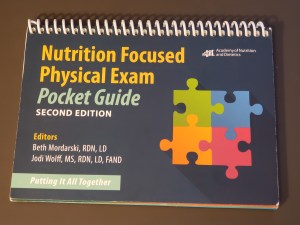
The nutrition focused physical exam (NFPE) is an indispensable skill that clinical dietitians need to be comfortable and adept at performing. I was able to perform the NFPE on several patients during this rotation. The first and most important thing about performing an NFPE is gaining the patient’s consent. If a patient would rather not have the NFPE performed on them, I tried to look at the patient from various angles and at different parts of their body to see if I could visually assess for fat and muscle wasting. I typically told the patient what part of their body I would touch before I touch it. A patient’s possible limited mobility, any lines or equipment attached to various parts of the patient, and their body posture in the hospital bed dictates what area of the patient’s body I could assess. Another important aspect of the NFPE is to try to assess what is “normal,” or the baseline body type for a patient before the illness occurred, to be able to determine how the patient’s body has changed over a defined period of time. Documenting evidence and data that are undoubtedly facts about the patient are necessary to diagnose for malnutrition. Two of the resources I used on almost a daily basis are the Nutrition Focused Physical Exam Pocket Guide and the Academy/ASPEN’s criteria to support a diagnosis of malnutrition.

The last part of the nutrition assessment and intervention part of the process is documenting it all in the note. At the start of the rotation, my notes were choppy and not comprehensive. I should have been embarrassed if I knew any better! Throughout the weeks of reading the dietitian’s previous notes and the notes of other healthcare providers, I gained a sense of correct verbiage, acronyms, and data needed to complete a note. I gained a sense of what information I needed to document and in the correct fashion. With time and practice, my note writing skills developed.

Collaborating with other members of the health-care team and revising nutritional needs based on the patient’s clinical course and plan of care are important parts of the process as well. After speaking with the patient, and sometimes the nurse and/or a patient’s family member, I thought I had all the information I needed to create a nutrition care plan and to write the patient’s note. Although, a sudden change in a patient’s plan of care updated from a doctor or nurse may require changing the nutrition intervention as well. (For example, a patient has just been extubated and is no longer receiving propofol, or the doctor no longer plans to initiate tube feeding). It is all a part of the process!